
Ensuring safety in the laboratory is of utmost importance, and biosafety cabinets and laminar flow hoods are critical pieces of equipment for achieving this goal. Although the two appear similar in appearance, they differ significantly in terms of function, application, and design principles. This article will provide a comprehensive comparison of biosafety cabinets and laminar flow hoods, detailing their uses and respective advantages. By understanding these differences, you can make a more informed choice about which equipment best suits your experimental needs.
What is a biological safety cabinet?
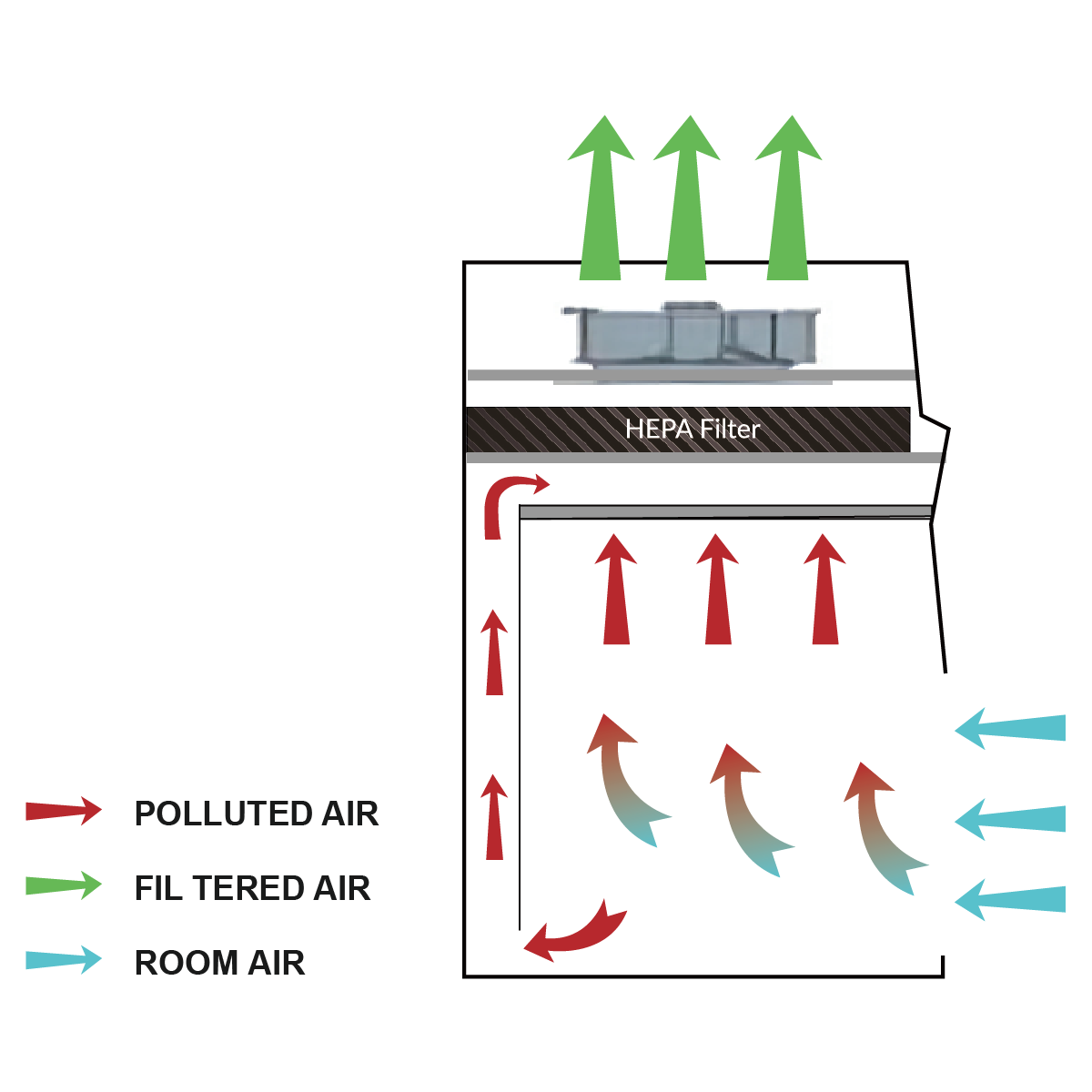
A biological safety cabinet (BSC) is also known as a biosafety cabinet. Due to their low risk of contamination, they are suitable for handling infectious materials. The primary purpose of a BSC is to protect you from biological hazards or infectious samples. Biological safety cabinets come in different grades: Class I, Class II, and Class III. All grades provide protection for users, but Class II and Class III only protect samples from contamination. A Class III biological safety cabinet, also known as a glove box, protects both the operator and the sample.
A biological safety cabinet creates laminar flow within the workspace and uses HEPA filters to filter the outgoing airflow. In a Class I biological safety cabinet, air is drawn in through the front panel and expelled into the external environment through a high-efficiency particulate air (HEPA) filter. However, in a Class II biosafety cabinet, approximately 70% of the filtered air is recirculated back into the work area, while 30% of the filtered air is expelled through an exhaust HEPA filter. These filters remove infectious particles and animal/plant matter from the outgoing air, ensuring safe human contact. The recirculated air also helps maintain a sterile environment within the work area. Biosafety cabinets do not protect laboratory personnel from chemical substances or gases.
What is a laminar flow hood?
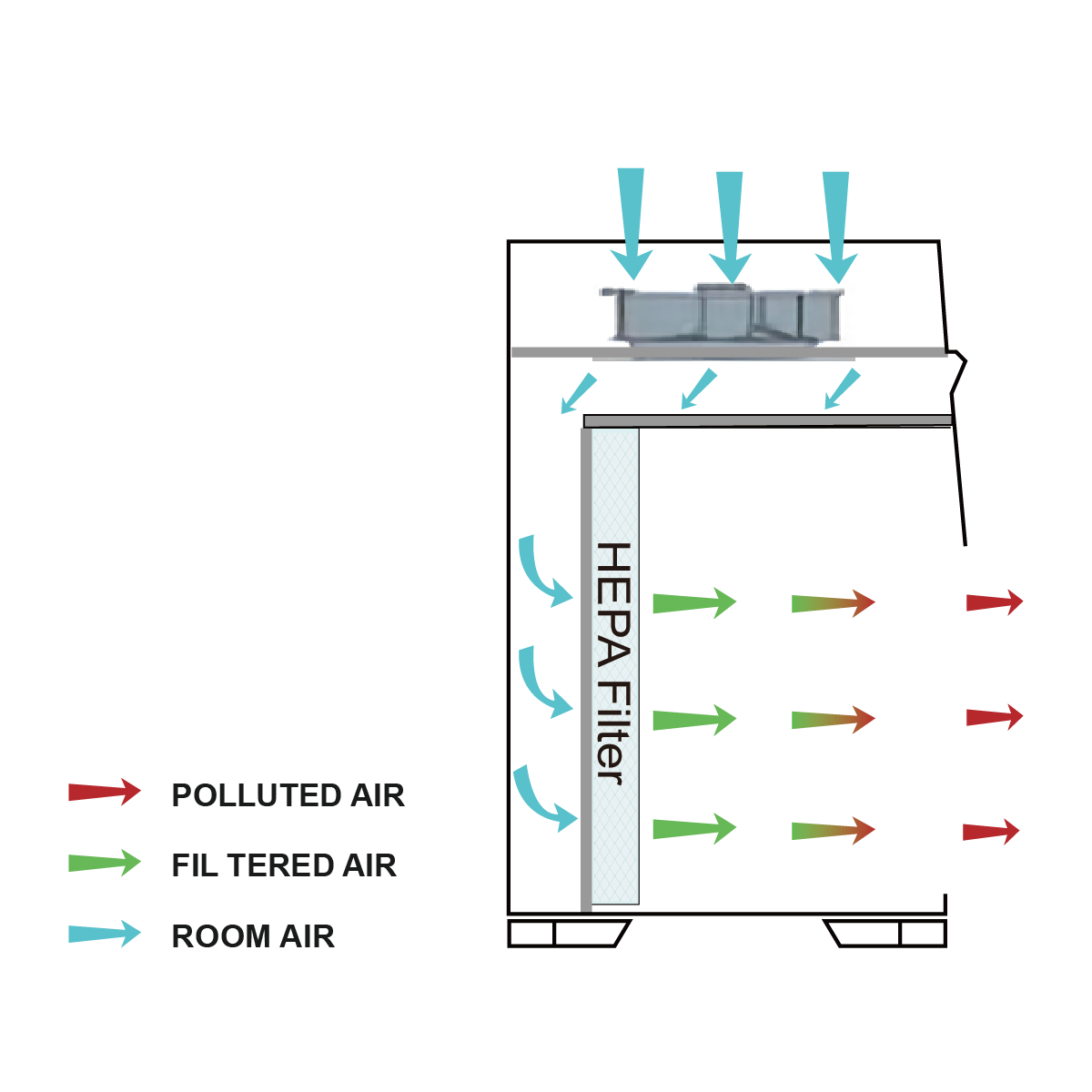
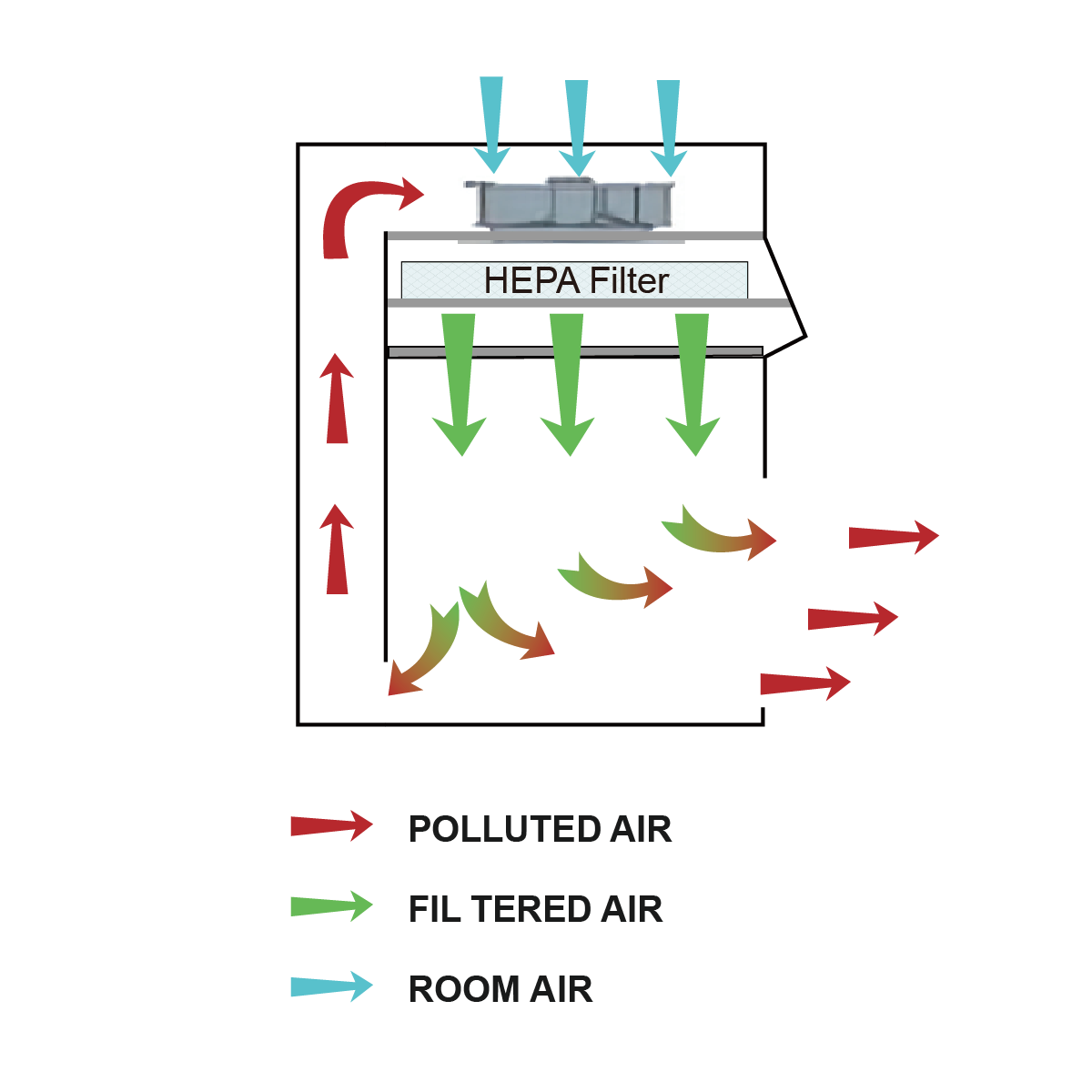
Right image: Vertical, left image: Horizontal
A laminar flow hood (LFH) is designed to provide a sterile environment for sensitive experiments. There are two types of laminar flow hoods: vertical and horizontal. The difference between these two configurations lies in the position of the filter and the direction of airflow within the hood. Horizontal airflow provides the highest level of contaminant removal, while vertical airflow is more suitable for large equipment.
The main difference from a biological safety cabinet (BSC) is that a laminar flow hood cannot exhaust contaminated air to the outside. Therefore, it is essential to avoid handling any infectious or hazardous materials inside the laminar flow hood.
Laminar flow hoods use the same filtration methods as biological safety cabinets, providing a highly sterile environment. They are also often more cost-effective. For non-hazardous biological experiments and preparations (such as medium preparation), a laminar flow hood is the optimal choice.
Laminar Flow Hoods vs. Biosafety Cabinets: How to Choose
Laminar flow hoods and biosafety cabinets share some similarities. However, understanding their respective characteristics is essential to determining which is more suitable for your needs.
The table below provides a detailed comparison of the two. The primary purpose of a biosafety cabinet is to protect users from infectious materials. A laminar flow hood is primarily used to protect samples from contamination. Both use HEPA filters, but their functions differ slightly: a biosafety cabinet (BSC) filters incoming and outgoing air, while a laminar flow hood (LFH) focuses on filtering incoming and outgoing air to remove particles and contaminants.
| Biological safety cabinet | Laminar flow hood | |
| Filtration | Uses HEPA filters used to filter both incoming air and outgoing air (Class II) | Uses HEPA filters used to filter incoming air, reducing particulates and contamination in workspace |
| Uses HEPA filters used to filter both incoming air and outgoing air (Class I) | ||
| Types | Class I | Vertical |
| Class II | Horizontal | |
| Class III | ||
| Protection Provided | User protection from infectious material | Sample protection from contamination |
| Sample protection from contamination (mainly Class II and Class III) | Highest level of sample protection with horizontal laminar flow hoods | |
| Weaknesses | Does not protect user from chemical or gaseous contaminants. | Does not protect user from chemical or gaseous contaminants |
| Should not be used with volatile or flammable chemicals | Should not be used with volatile or flammable chemicals | |
| Sterility of environment will vary based on fume hood classification | Does not protect users from infectious samples | |
| Can be used for | Processes and experiments using infectious materials | Non-harmful processes, such as media plate preparation or working with DNA |
An important distinction is that laminar flow hoods cannot protect users from infectious agents, whereas biosafety cabinets can.
Neither device can protect you from chemical or gas contaminants, so volatile or flammable chemicals should not be handled in either device. When handling these substances, use equipment that provides a barrier between the user and the material, such as a glove box.
From an application perspective, biosafety cabinets are suitable for processes involving infectious materials. Laminar flow hoods are suitable for non-hazardous processes, such as culture medium plate preparation or DNA manipulation.
Laminar Flow Cabinet vs. Biosafety Cabinet: How to Choose
When using large equipment, choose a vertical laminar flow cabinet due to its taller and deeper workspace. The air discharged from a vertical laminar flow cabinet is returned to the environment without treatment, so only non-hazardous materials can be handled in the work area. Laminar flow cabinets are designed to protect products or processes on the work surface from particles captured by HEPA filters.
When user and environmental protection is required, a biosafety cabinet must be used. Biological safety cabinets offer various grades and different levels of protection.
Class I biological safety cabinets are designed for operator protection.
Class II and III cabinets protect products or samples, users, and the environment from contamination.
Class II cabinets allow open access to the work area, while Class III BSCs (commonly referred to as glove boxes) provide a barrier between the user and the work area.
Class III biosafety cabinets are critical for handling any Biosafety Level 4 agents or other hazardous materials, such as aerosols of pathogens or toxins.
Biological safety cabinets create parallel unidirectional laminar flow on the work surface. However, laminar flow cabinets are not biological safety cabinets. Laminar flow cabinets are configured to protect items on the work surface. Since airflow pushes aerosols or particles from the work surface toward the operator, they do not protect the operator.






Get Social